Ofrynio Beach – Touzla
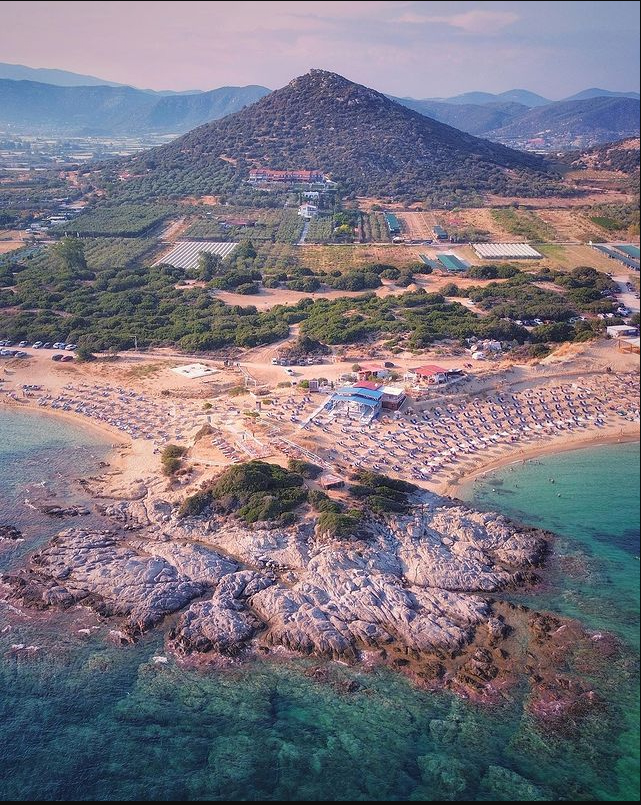
Paralia Ofryniou, locally famous as Touzla, is a lively coastal resort in the Kavala region of Northern Greece.
Stretching along the Strymonian Gulf at the foothills of Mount Pangaio, it blends ancient history, natural beauty, and a vibrant summer atmosphere.
Why It’s Called “Touzla”
- Salty Origins. The nickname “Touzla” comes from the Turkish word tuz (salt) and tuzla (saltworks or salt flat). Historically, the area featured marshlands and saline soil where locals harvested salt during the Ottoman era.
- A Modern Boom. While the name “Paralia Ofryniou” became official in the early 1980s, locals and visitors from Northern Greece and the Balkans still affectionately call it Touzla.
Ancient & Mythological Roots - Alexander the Great’s Departure. Just west of the beach lies the mouth of the Strymonas River and the site of ancient Eion, the port of Amphipolis. According to the ancient historian Arrian, this is where Alexander the Great’s fleet set sail for his campaign into Asia.
- Land of Dionysus. Situated at the base of Mount Pangaio, the wider area is deeply tied to the worship of Dionysus, the ancient Greek god of wine. Today, the surrounding hills are home to renowned boutique wineries, such as Ktima Biblia Chora.
- Close to Major Discoveries. The resort is a short drive from the famous Kasta Tomb and the monumental Lion of Amphipolis.
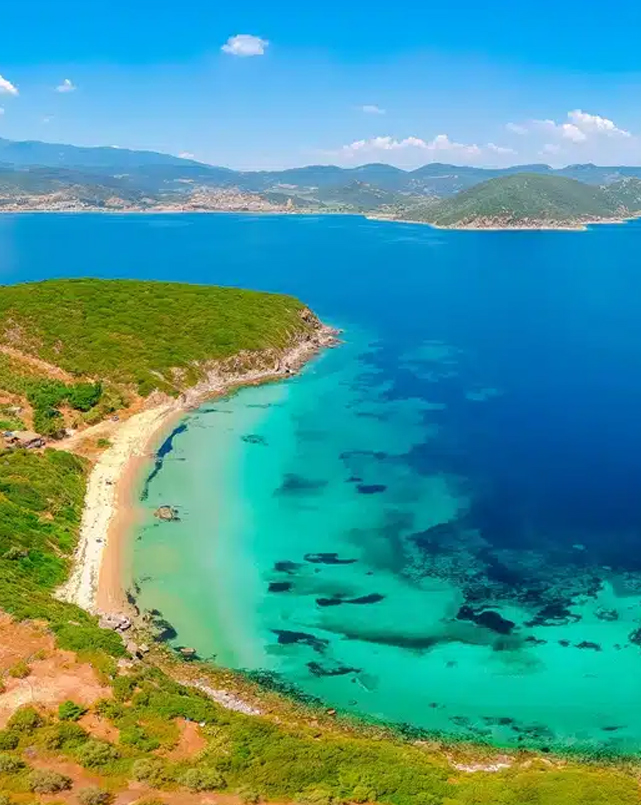
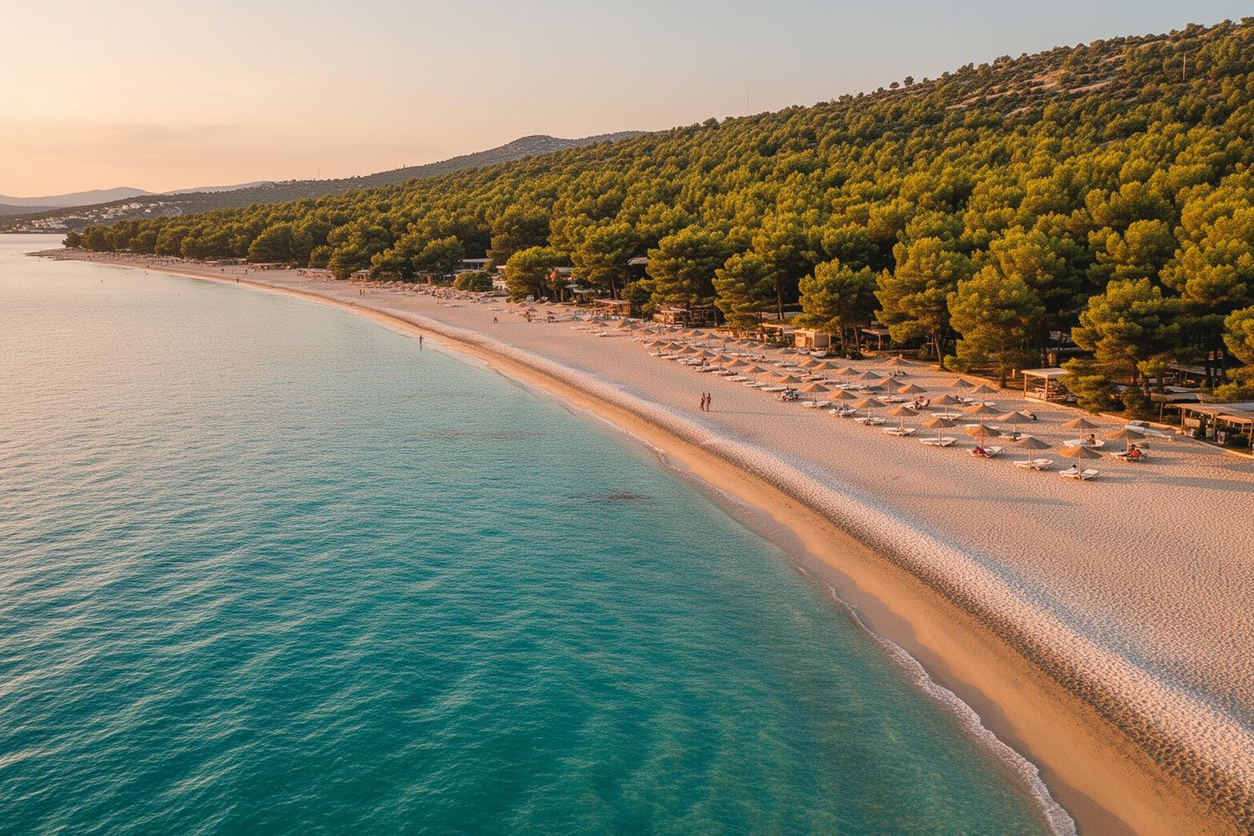
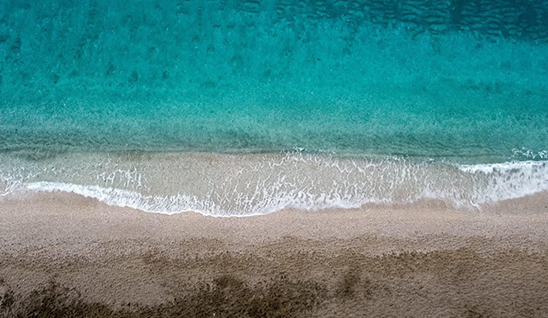
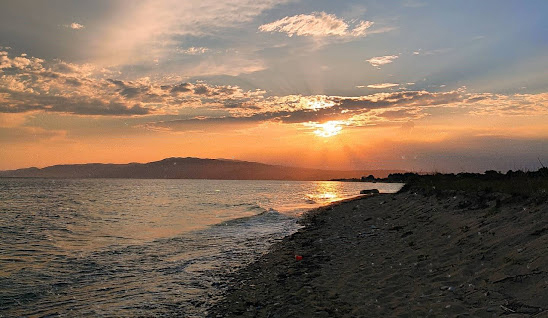
Beach & Local Vibe - 17 Kilometers of Coastline. The area boasts an expansive, sandy-and-pebbly shoreline with crystal-clear, shallow waters that are popular with families.
- Bustling Summer Hub. During the summer, the quiet coastal village transforms into a lively pedestrian promenade lined with beach bars, fresh seafood tavernas, and open-air markets.
- Flamingo Sightings. Nature lovers can spot wild flamingos and diverse migratory birds gathering at the nearby Strymonas River delta.
Nearby Archaeological Sites
- Lion of Amphipolis. A monumental 4th-century BC marble sculpture standing over 5 meters tall near the Strymonas River, erected in honor of Laomedon, one of Alexander the Great’s generals.
- Archaeological Museum of Amphipolis. A compact, well-curated museum showcasing gold wreaths, pottery, and artifacts spanning from prehistoric times to the Roman era.
- Kasta Tomb. The massive Macedonian burial mound that made global headlines for its marble sphinxes and mosaic floors (exterior viewing is open, while interior access remains restricted for ongoing preservation).