
THE LOCATION
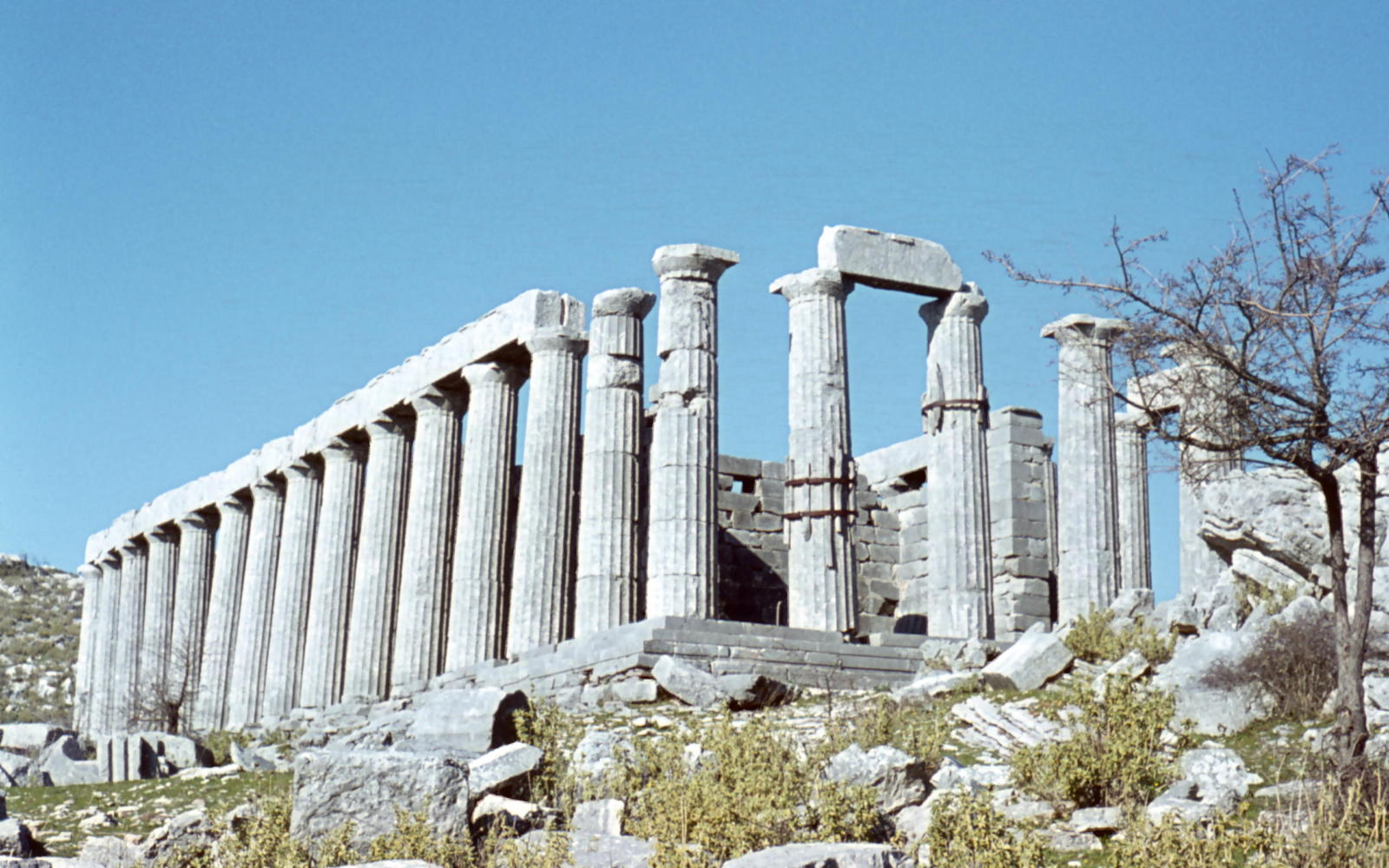
The temple of Apollo Epikourios stands in the bare, rocky landscape of Bassae – one of the most important and imposing temples of antiquity.
Pausanias ranked it among the finest temples of the Peloponnese, second only to Tegea. It is believed to be the work of Iktinos, who blended Arcadian Archaic traditions with the new Classical style.
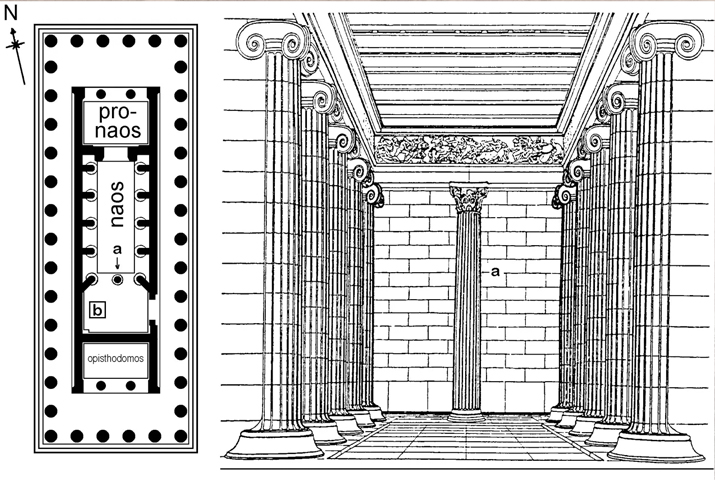
ARCHITECTURE
UNIQUE
THREE ORDERS
The only known ancient temple to combine Doric, Ionic and Corinthian orders.
6 × 15
ELONGATED PLAN
Six columns on the short sides and fifteen on the long – an Archaic proportion.
FIRST
CORINTHIAN CAPITAL
A single column inside the cella carried the earliest known Corinthian capital in Greek architecture.
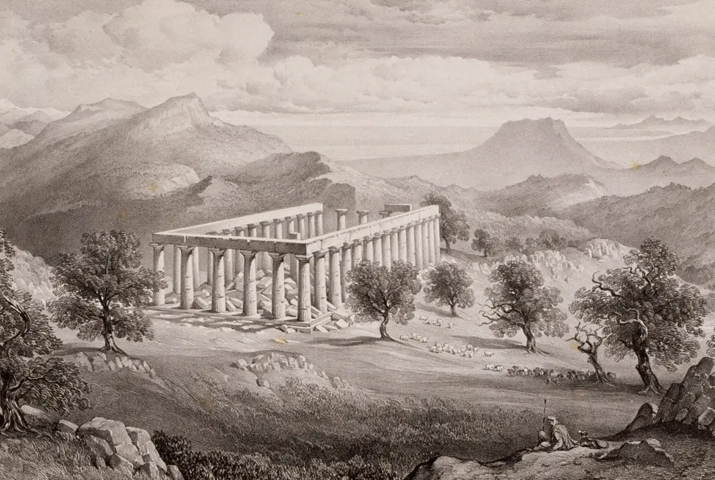
ORIENTATION
EAST–WEST
Like several Arcadian temples it runs east–west instead of the usual north–south, probably by local tradition.
MATERIALS
GREY LIMESTONE & MARBLE
Local grey limestone, with marble for parts of the roof, the cella capitals and the sculptures.
EARLIER
7TH CENTURY BC
The first temple on the site was rebuilt around 600 and 500 BC; terracotta pieces from those phases survive.
THE FRIEZE
31 METRES
23 MARBLE SLABS
Greeks fighting Amazons and Lapiths fighting Centaurs ran around the cella.
1815
BRITISH MUSEUM
Uncovered by antiquaries in 1812 and sold to the British Museum in 1815.
SCULPTOR
PAIONIOS?
Possibly the work of Paionios, creator of the Nike of Olympia.
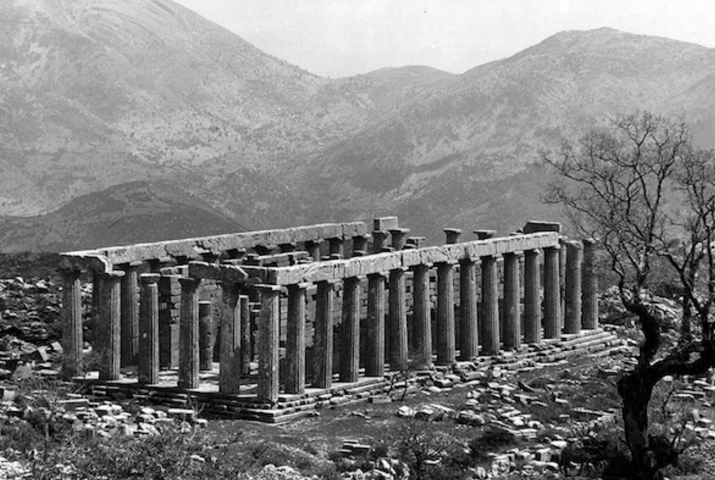
RESTORATION
1765
REDISCOVERED
Identified by French architect J. Bocher, and explored by antiquaries in 1812.
1902–06
FIRST WORKS
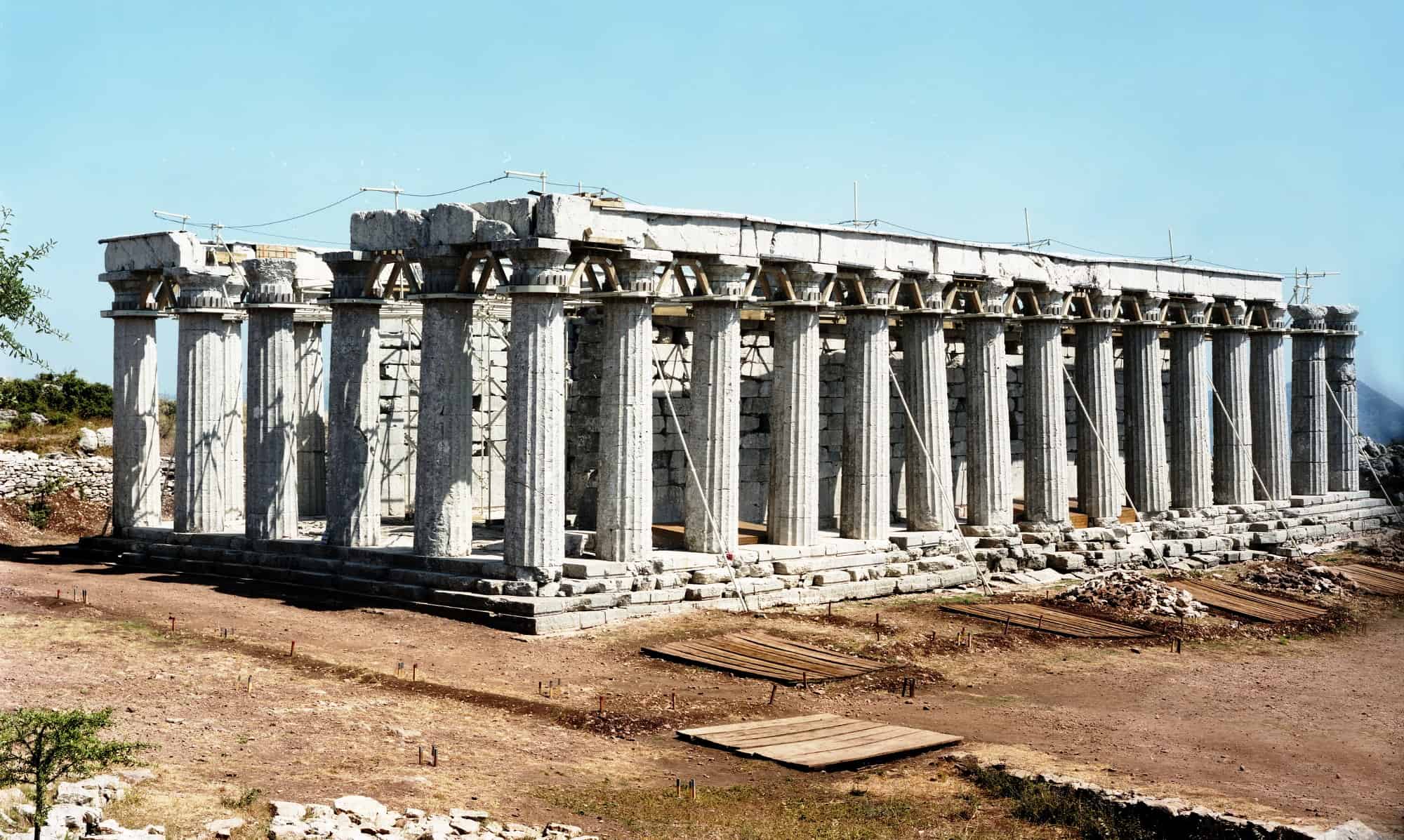
The Greek Archaeological Society excavated and restored parts of the temple.
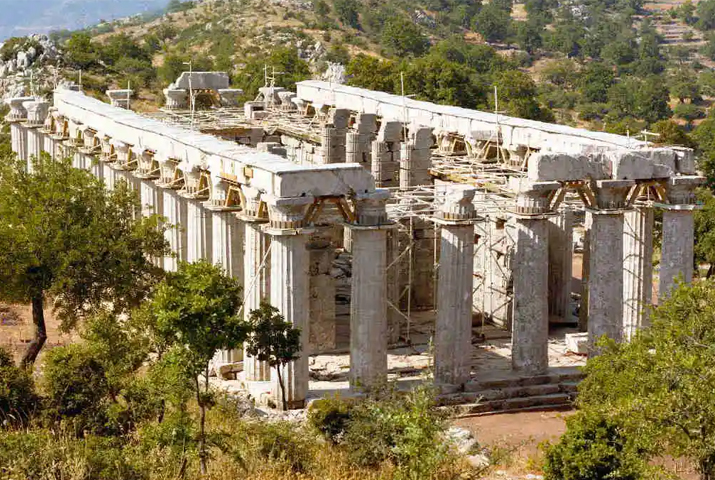
1987
THE SHELTER
A protective tent shields it from the harsh weather while restoration continues. Author: Olympia Vikatou (archaeologist).
MORE LOCATIONS
OLYMPIA TOWNANCIENT SITEKAIAFAS LAKEFOLOI FORESTPOLYLIMNIOAGIA THEODORA CHURCHNEDA RIVERNEMOUTA WATERFALLSKALAMATA TOWNKARDAMYLIMANITAYGETOS MOUNTAINPINIOS LAKELADONAS RIVERERYMANTHOS RIVERXYLOKASTRO TOWNZIRIA MOUNTAINKALAVRYTA TOWNHELMOS MOUNTAINLAKES’ CAVEODONTOTOS RAILWAYMONASTERIES
Race through the Peloponnese